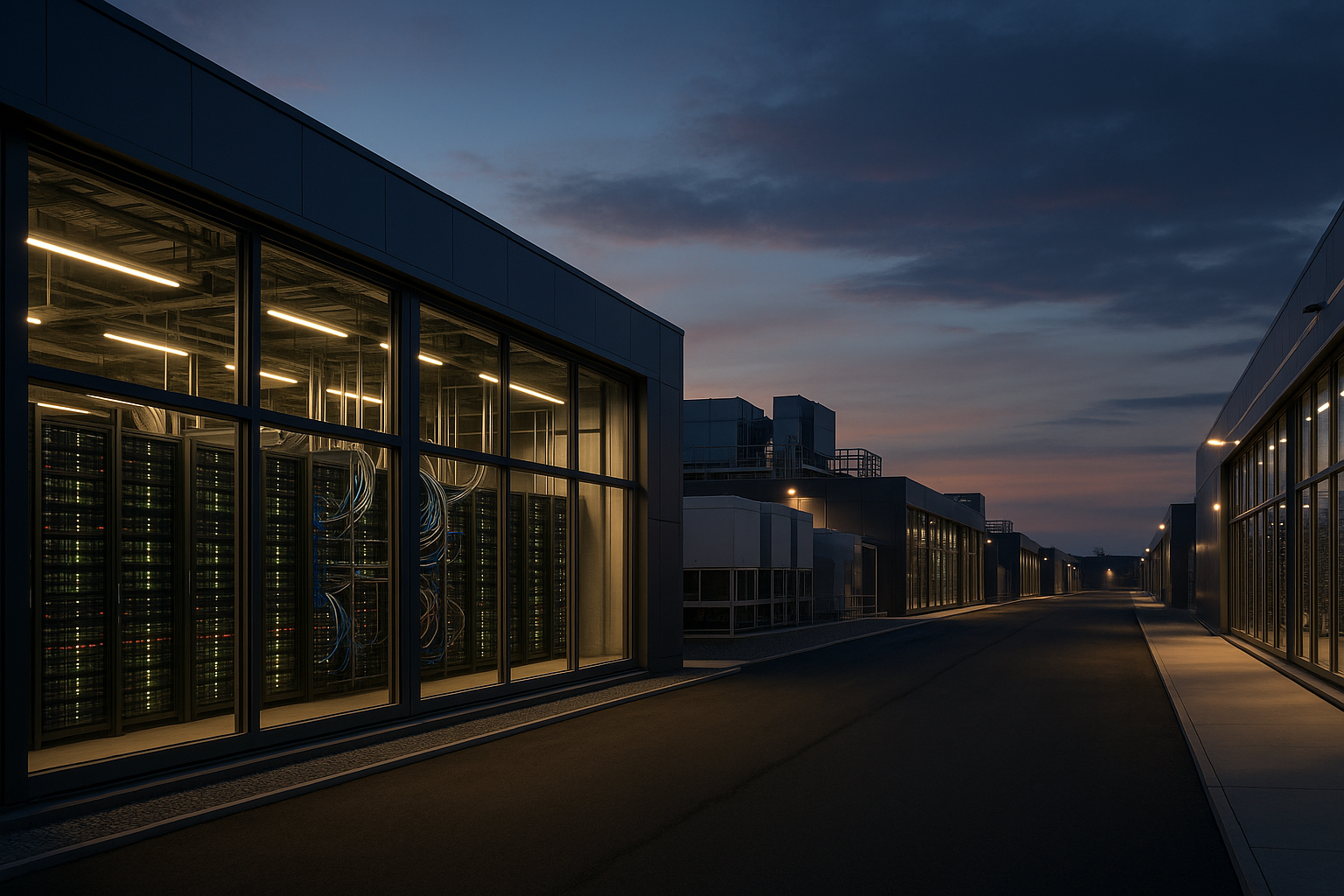
Anthropic’s reported seven-year infrastructure deal with Akamai is more than a vendor win. It is a clue that the AI compute market is starting to widen beyond the usual trio of hyperscale clouds. Akamai said in its first-quarter earnings release that a leading U.S.-based frontier model provider has committed $1.8 billion over seven years for its Cloud Infrastructure Services business, and Reuters, citing Bloomberg News, reported on Friday that the customer is Anthropic (Akamai, May 7; Reuters, May 8).
A deal big enough to change the mix
The size matters because it is large relative to Akamai’s current cloud business. Akamai said Cloud Infrastructure Services revenue was $95 million in the first quarter, up 40% year over year, while total company revenue reached $1.074 billion, up 6% from $1.015 billion a year earlier (Akamai, May 7). Spread evenly, a $1.8 billion commitment would imply about $257 million a year — nearly three times the segment’s most recent quarterly run rate.
Akamai’s core security business is still much larger. Security revenue was $590 million in the quarter, up 11% year over year, while delivery and other cloud applications revenue fell 7% to $389 million (Akamai, May 7). That mix shows why the Anthropic-linked contract matters: it gives Akamai a plausible path to turning AI infrastructure from a promising side business into a more material growth engine.
Why Anthropic would look beyond the biggest clouds
Akamai did not name the customer in its filing, describing it only as a “leading, U.S.-based frontier model provider” (Akamai, May 7). Reuters said Bloomberg identified that customer as Anthropic (Reuters, May 8). If accurate, the pairing is strategically important because Anthropic already depends heavily on large-scale cloud partnerships elsewhere, and a deal of this size suggests frontier-model labs are becoming more willing to diversify where inference and related workloads run.
That matters globally. Akamai said international revenue was $530 million in the quarter, versus $543 million in the United States, underscoring how much of its footprint already sits outside one market (Akamai, May 7). For AI developers, that kind of distribution can matter as latency, regional compliance and cost control become more important than simply renting the maximum number of GPUs from the largest provider.
Investors treated it as an AI infrastructure signal
Markets reacted quickly. Akamai shares traded at $147.71 late Friday, up from a previous close of $103.87, after touching an intraday high of $149.76, according to Yahoo Finance market data accessed May 8. The move came even though Akamai’s profitability metrics were mixed: GAAP diluted EPS fell 13% year over year to $0.71, while non-GAAP diluted EPS slipped 5% to $1.61 (Akamai, May 7).
Akamai also guided for full-year 2026 revenue of $4.445 billion to $4.55 billion, with second-quarter revenue expected at $1.075 billion to $1.10 billion (Akamai, May 7). Those are solid numbers, but the sharper signal is what investors appear to be pricing in: not just one contract, but the possibility that a broader class of AI buyers may start spreading demand across a wider set of infrastructure suppliers.
The immediate lesson is simple. In the next phase of the AI build-out, the winning vendors may not be limited to the biggest cloud platforms. If Anthropic is indeed the customer, Akamai’s announcement suggests the market for frontier-model infrastructure is beginning to fragment — and that could reshape both pricing power and competitive leverage across the global AI stack.


Discussion
Sign in to join the discussion.
No comments yet. Be the first to share your thoughts.